How to use the salary calculator
There are two ways to use the calculator:
We recognise that tax rules can be complicated, so all you need to do is populate the salary input boxes, and we will do the rest. Our Salary Calculator has been pre-populated with the most common variables, so once you enter your salary, we can provide an accurate calculation. This is useful for those wanting to calculate an estimate of their take-home pay quickly.
Our calculator offers dozens of editable input fields for those wanting more precise control over the variables used in their salary calculation. Our calculator uses the calculation methodologies prescribed by HMRC, so adjusting these input fields to represent the actual working arrangements of the contract in question will provide an accurate breakdown between take-home pay and all relevant deductions.
What do ‘Your Results’ mean?
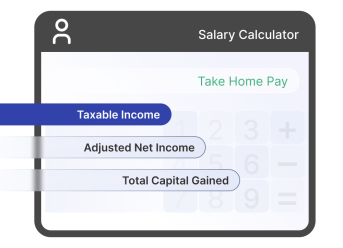
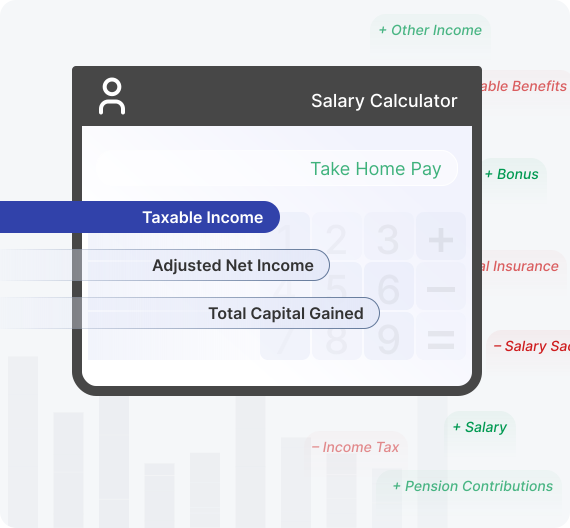
This section explains the key figures shown in your calculation. Each term provides a different perspective on your earnings and helps you better understand your overall financial position.
Net income is your total taxable income before any Personal Allowances, less any qualifying pension contributions. Your personal allowance is reduced by £1 for every £2 that your net income is above £100,000. Your allowance is zero if your income is £125,140 or above. If your net income exceeds £150,000, you will likely need to submit a Self-Assessment tax return.
Take home is the amount you receive into your personal bank account after deducting all taxes, accrued holiday pay and student loan contributions.
Total capital consists of your take home pay, plus any pension contributions and accrued holiday pay. It is designed to give a more accurate representation of the overall financial gain from a contract and can be compared against the same figure in our Outside IR35 Calculator.
Adjusted Net Income
Adjusted Net Income (ANI) is a key HMRC calculation used to determine eligibility for tax allowances, benefits and filing requirements. It is not your gross salary, but your total taxable income before Personal Allowance, minus qualifying deductions.
ANI includes employment income, benefits in kind, self-employment profits, rental income, dividends and savings interest. From this total, you deduct gross pension contributions (including salary sacrifice) and Gift Aid donations. The resulting figure is used to assess income-related thresholds.
Once ANI exceeds £100,000, your Personal Allowance is reduced by £1 for every £2 of additional income. At £125,140, it is fully removed. This creates an effective marginal tax rate of around 60% between £100,000 and £125,140.
If either partner has ANI above £100,000, eligibility for Tax-Free Childcare ends immediately. ANI is also used when calculating the High Income Child Benefit Charge.
If income exceeds £150,000, you will typically need to file a Self-Assessment tax return, even if taxed under PAYE.
Pension contributions and salary sacrifice reduce ANI, they can restore allowances, protect benefit eligibility and materially improve overall tax efficiency.
Why a salary calculator matters
A salary calculator is vital because it helps you understand the difference between the salary advertised by an employer and the amount you actually receive. Many people are surprised at the gap between gross salary and take-home pay, especially when they move into higher tax brackets or begin repaying a student loan.
A calculator allows you to understand the financial impact of a pay rise, evaluate different job offers, estimate your take-home pay from overtime or bonuses, and plan your budget with confidence. It also helps you understand how tax codes, benefits, pensions and deductions shape your final pay.
Why a salary calculator matters for contractors
A salary calculator is equally important for contractors, especially those working under varying engagement models, day rates and tax structures. Contractors often need to compare the financial implications of working inside IR35, outside IR35, or taking on a full-time salaried role, and the difference between these options can be significant. A traditional salary calculator designed for employees does not account for the complexities of contracting, which is why a specialised contractor salary calculator becomes essential for accurate planning.
Contractors working inside IR35 are taxed similarly to employees through PAYE, meaning Income Tax and National Insurance are deducted at source. This reduces their take-home pay compared with an equivalent outside IR35 day rate, and it often removes the ability to claim common business expenses. A proper salary calculator allows contractors to see the real impact of inside IR35 taxation and how it compares with permanent employment. Without this insight, it is difficult to judge whether an inside IR35 contract offers genuine financial value compared with a full-time job with benefits such as holiday pay, pension contributions and employer NI.
For contractors working outside IR35, take-home pay is calculated differently. They may draw income through a limited company structure, combining a low salary with dividends, and potentially factoring in allowable expenses, flat-rate VAT and corporation tax. A contractor salary calculator helps them understand how these elements affect net income, enabling them to compare outside IR35 contracting with both inside IR35 roles and salaried employment. This comparison is crucial because the headline day rate alone does not reflect true profitability or long-term earnings potential.
A calculator built for contractors also helps them evaluate contract offers more precisely. It shows how changes in day rate, contract length, business expenses, and tax rules impact take-home pay. This clarity allows contractors to negotiate better rates, assess whether a project is financially worthwhile, and plan for gaps between contracts. Without clear calculations, contractors may underestimate tax liabilities or overestimate profitability, which can lead to budgeting issues later on.
How our salary calculator works
Our salary calculator begins with your gross annual salary. This is the total amount you earn before any deductions are applied. The calculator then applies Income Tax based on the current tax bands. Income above the Personal Allowance amount is taxed at 20 percent until you reach the higher rate threshold, where additional income is taxed at 40 percent. Income over the top threshold is taxed at 45 percent. The calculator also manages situations where your Personal Allowance is reduced, such as when you earn more than £100,000 a year.
Next, the Salary Calculator calculator applies National Insurance contributions. Employees in the UK pay Class 1 National Insurance based on their weekly or monthly salary. Income between the lower threshold and the upper threshold is charged at eight percent, while income above the upper threshold is charged at two percent. These contributions help you qualify for benefits such as the State Pension, maternity pay, paternity pay and statutory sick pay.
The calculator then deducts pension contributions if you are part of a workplace pension scheme. Most UK employees are automatically enrolled into a pension, with typical contributions set at 8% of qualifying earnings, split between employee (5%) and employer (3%). Pension deductions are usually tax-efficient because they reduce your taxable income. The calculator accounts for this and adjusts your take-home pay accordingly.
If you have a student loan, the salary calculator applies the correct repayment plan. Different plans have different repayment thresholds and rates, depending on when and where you studied. Repayments only begin when your salary exceeds the relevant threshold, and only the income above the threshold is subject to repayment. Postgraduate loans are repaid separately from undergraduate loans and have their own rules.
Finally, the calculator may apply other additions and deductions such as salary sacrifice schemes, bonuses, overtime and tax code adjustments. When completed, it provides an accurate estimate of your annual, monthly, weekly and daily take-home pay.
How tax codes impact your take-home pay
Tax codes play a significant role in determining how much tax is deducted from your salary each month. Most people in the UK have the standard 1257L tax code, which grants them the full Personal Allowance. However, temporary or emergency tax codes, such as 0T or BR, can lead to higher deductions and unexpectedly low take-home pay. A salary calculator helps you understand how your tax code impacts your earnings by showing how much tax you would pay under the correct code compared with an incorrect one. It also explains why your take-home pay may change when HMRC updates your tax code mid-year due to changes in benefits, second jobs, underpaid tax from previous years, or adjustments to allowances.
How bonuses are taxed
Bonuses often appear to be heavily taxed, which leads many employees to feel disappointed when the final amount enters their bank account. This happens because bonuses are added to your salary and taxed through PAYE in the month or week they are paid. If your bonus temporarily pushes your earnings into a higher tax bracket, you may pay more tax and National Insurance than expected. A salary calculator helps you estimate the take-home value of your bonus by showing the exact deductions applied. It also helps explain why bonus payments sometimes appear to attract more tax even though the rate applied is the same as your regular income tax. Understanding this makes it easier to plan for large payouts and reduces surprises when your bonus arrives.
National Insurance
National Insurance (NI) is deducted alongside Income Tax through PAYE and directly affects your take-home pay. Our Salary Calculator models both employee and employer contributions so you can see the full impact on net income and total employment cost.
Employees pay Class 1 National Insurance on earnings above the Primary Threshold. Income within the main band is charged at 8%, and income above the Upper Earnings Limit is charged at 2%. NI is separate from Income Tax and generally applies if you are under State Pension age and earning above the threshold.
Employers pay Class 1 National Insurance at 13.8% on earnings above the Secondary Threshold. This does not reduce your net salary directly but increases the total cost of employment, which is important when comparing permanent roles with contract work.
Benefits in Kind (such as a company car or private medical insurance) trigger Income Tax for the employee, while the employer pays Class 1A NI at 13.8%. Cash allowances are treated as salary, meaning both employee and employer NI apply.
Because NI is calculated on gross earnings, reducing salary through pension salary sacrifice lowers both employee and employer NI, improving tax efficiency.
Inside IR35 contracts are taxed through PAYE, meaning Income Tax, employee NI and employer NI all apply, often reducing the headline day rate. Outside IR35 contractors pay NI only on salary drawn from their company, with no NI due on dividends, allowing more flexible income structuring.
Student loan repayments
Our Salary Calculator includes UK student loan repayment calculations so you can see the true impact on your take-home pay. Repayments only apply once your income exceeds your plan threshold, and you repay a fixed percentage of earnings above that threshold, not your entire salary.
Different plans (Plan 1, Plan 2, Plan 4 and Postgraduate loans) have different thresholds and repayment rates.
Scottish salary calculations
Scotland uses a different Income Tax structure from the rest of the UK, which means Scottish residents may take home more or less money even when earning the same gross salary as someone in England or Wales. A salary calculator that supports Scottish tax rates explains how the Starter, Basic, Intermediate, Higher, and Top bands affect take-home pay. These additional tax bands create a more graduated tax structure, and this can be confusing without a clear breakdown. A calculator tailored to Scotland helps users understand why their take-home pay differs from colleagues in other regions and how crossing a threshold affects marginal tax rates. This is particularly useful for employees who move between regions, contractors working nationwide, and employers managing workers across the UK.
Converting hourly, weekly, monthly and annual pay
Many workers in the UK are paid hourly, while others think in terms of monthly or annual salaries. A salary calculator helps convert between these formats with accuracy, enabling users to understand how an hourly rate translates into annual income and vice versa. Someone earning an hourly wage may want to know how their income compares to a full-time salaried role, while salaried employees may use conversions to estimate the value of overtime or freelance work. Converting between weekly, monthly and annual pay helps users compare offers from different industries or roles and evaluate whether changes in working hours will impact their lifestyle. Our salary calculator simplifies these conversions and provides a consistent and accurate view of true earning potential.
How salary sacrifice impacts take home pay
Salary sacrifice schemes such as pension contributions, electric vehicle programmes, childcare benefits or cycle-to-work schemes are becoming increasingly popular because they reduce taxable income and improve tax efficiency. However, many people struggle to understand how these schemes affect their take-home pay. A salary calculator helps demonstrate how salary sacrifice arrangements reduce gross pay, lower Income Tax and National Insurance, and increase net tax efficiency. It also shows the long-term financial benefits of pension salary sacrifice and helps users compare different contribution levels. This makes it easier to decide whether to join or increase participation in a salary sacrifice scheme and understand the net impact on everyday finances.
Annual tax system updates
The UK tax system changes every year, and these updates can significantly influence take-home pay. Our salary calculator incorporates the latest tax rules to allow users to see how changes affect them immediately. Whether the Personal Allowance has shifted, National Insurance rates have been adjusted, or student loan thresholds have changed, our salary calculator helps users understand what the new tax year means for their finances. This is particularly valuable for those evaluating job offers, planning salary negotiations or budgeting for the year ahead. A year-to-year comparison also helps users understand whether they are better or worse off under new tax rules.